Programme
- Gioachino RossiniIl turco in Italia
About
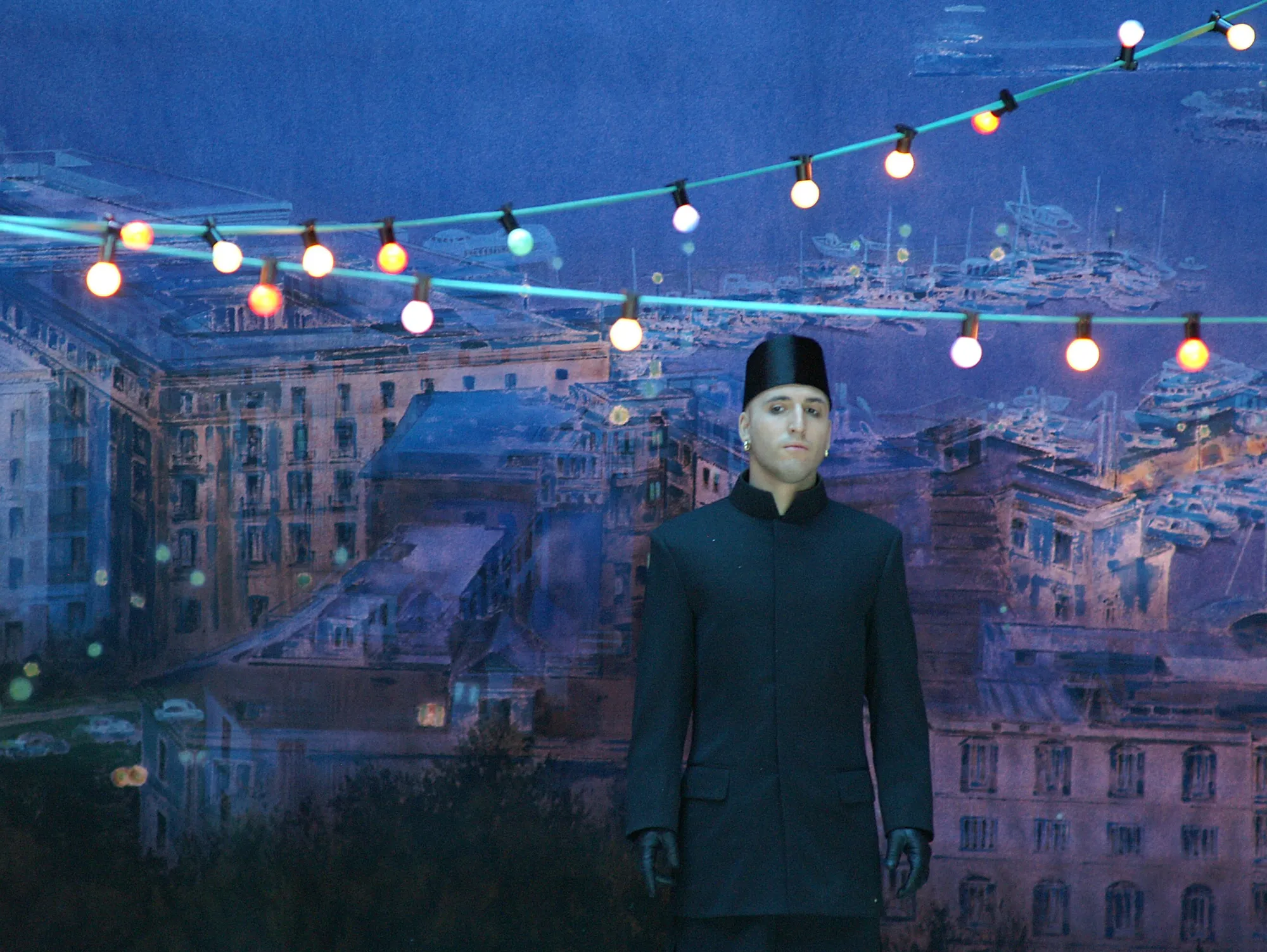
Christof Loy, one of the most influential opera directors of his generation, has created a series of productions at the Hamburg State Opera, from Georg Friedrich Händel's Alcina to Richard Strauss' Daphne. In 2005, he presented Gioachino Rossini's Il turco in Italia from 1814 here. This work, which was called a 'Turkish opera' at the time, is a light comedy. Or rather, it was a light comedy. For quite simply, the comedy is not that straightforward anymore. Since the 17th century, it has been very popular on European stages to take up and continue the reports of travelers returning from the 'Orient'. Molière and his composer friend (and competitor) Jean-Baptiste Lully invented for the great finale of their ballet comedy Le Bourgeois gentilhomme a famous 'turquérie'; Wolfgang Amadeus Mozart placed an entire opera in a fantasy Turkey with Die Entführung aus dem Serail; and Rossini himself wrote only a few years after his Turco in Italia with Maometto II another opera about the (cultural) conflicts between Europe and the Ottoman Empire. None of these stories are innocent. In characterizing the unknown culture, they select a few features and magnify and distort them to the point of caricature. The use (often even the first invention) of racist stereotypes, in order to develop an entertaining narrative against this background, has a tradition in Europe, thus Il turco in Italia is no exception. In his 2005 production, Christof Loy amplifies the stereotypes called upon by Rossini and his librettist Felice Romani. For example, the Turkish prince Selim travels to Naples on a flying carpet; his former lover Zaida dances a 'belly dance' that originates from the darkest corners of European eroticism; and the so-called 'Gypsies' in the libretto live in a tiny caravan, roughly fifty to one. In an interview, which you can read in this program booklet, Loy says: 'I go one step further than the authors originally intended. Because it is important to me that one feels the longing for distant places.' The directorial exaggeration is so drastic that it becomes comical. With this, the 20-year-old production marks a historical moment in which stereotypes were not simply reproduced, but were pushed to the extreme in ironic turns, in order to question them. From today's perspective, however, this zeitgeist and its strategies may seem outdated. Whether the apparently comical exaggeration actually distorts the stereotypes or whether the exaggeration rather solidifies them is also a question that goes beyond the aesthetic field. Twenty years after the great success of Loy's production, the stereotypes and the comedy based on them have changed. The movements for citizens' rights of the last decades have entered the mainstream. The awareness of the exploitation of non-white foreigners in Germany (for example, of guest workers in the 20th century or of migrant low-wage workers today) as well as the racist violence they face has awakened in the social mainstream. With this awakening awareness, the view on Rossini's opera and the production has also changed. It is now unmistakable that the question arises whether we should continue to rely on the bourgeois tradition of producing entertainment at the expense of other cultures. Or whether it is time to give up the racist degradation of other people for the sake of our amusement, especially as the society in which we live is already shaped and shaped by people who bring migrant experiences (also and naturally from Turkey) in first, second, and third generations. But what should we then do with our beloved operas, from Die Zauberflöte onwards...
Tickets & info ↗