Programme
- Giuseppe VerdiLa traviata
About
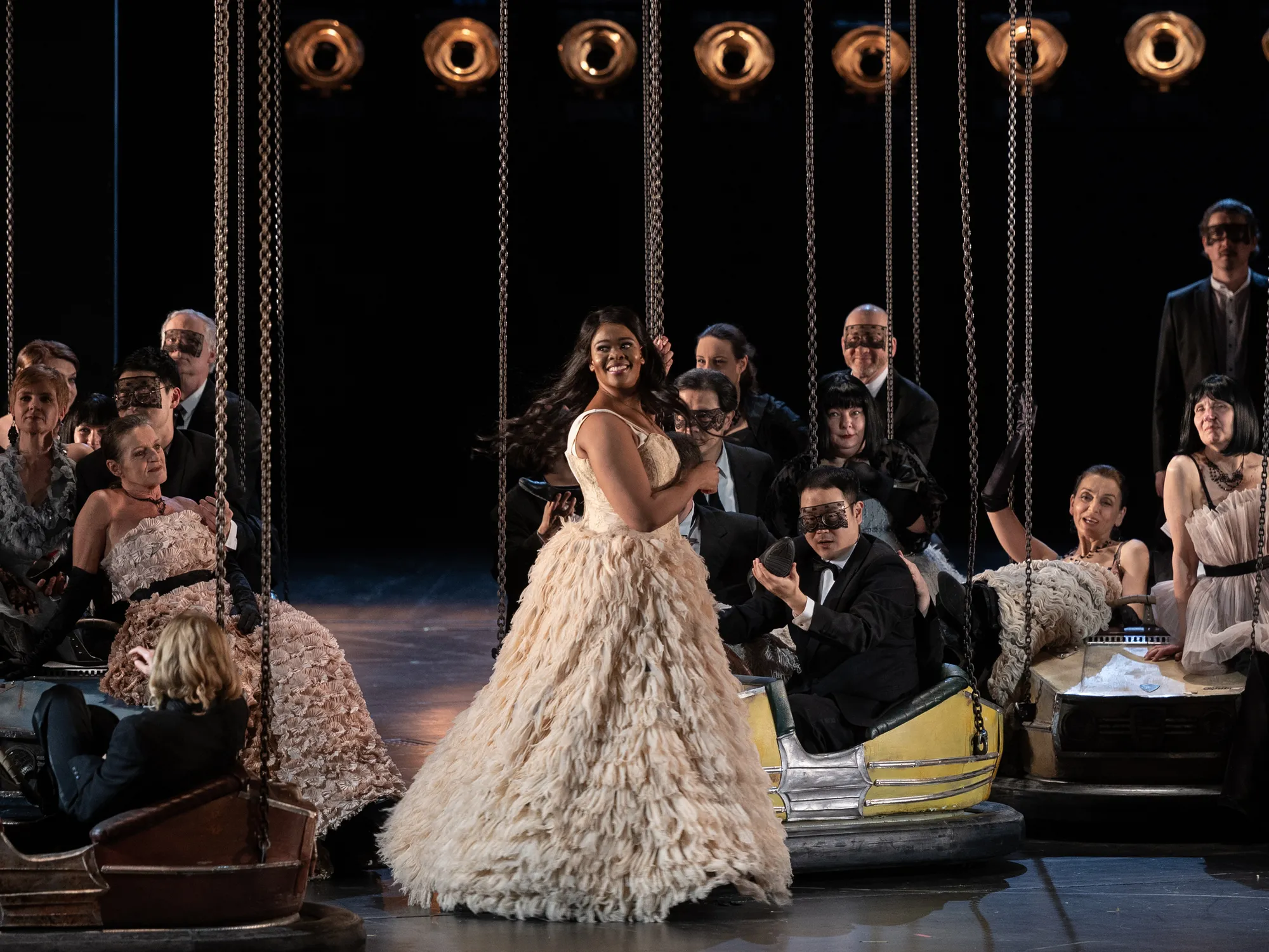
When this production was first performed in 2013, mainstream culture was just taking a break from feminism—there was so much else to discuss: the aftermath of the Arab Spring, the revelations of Edward Snowden, the German federal election, the still relatively new smartphone, the first resignation of a pope (a German one, no less), and so on. Feminism was not a big topic. Director Johannes Erath and dramaturge Francis Hüsers knew in 2013, when they were developing this production, nothing yet about #metoo. That came in 2017. Nevertheless, they structured their production with a critique of masculinity. They already knew in 2013 that Alfredo could not get away with his actions unscathed. Unlike his Venetian shadow from the original 1853 premiere, the Alfredo of this production knows from the beginning that his egoism and carelessness are to blame for the tragedy of the 'courtesan' Violetta Valéry. And he regrets it. When the opera begins, Violetta is already dead, and the action unfolds in the grieving mind of Alfredo. The story of his love and jealousy plays out as a futile play before his inner eye. The Alfredo of 2013 knows he has burdened himself with guilt. And since Violetta in this production is already dead when the repentant Alfredo finally rushes to her, forgiveness is also excluded. In 2026, things look different. #metoo has changed feminism and the world (now… a part of it): Harvey Weinstein is in prison, Prince Andrew is no longer a prince, and in Germany, 'Cat Calling' is to become a criminal offense. In 2026, Violetta Valéry—perhaps—would no longer be the centuries-old iconized female victim in a white nightgown, barefoot and with tousled hair; her maid Anina—perhaps—would no longer be the patiently following, compassionate figure; Alfredo’s father Germont—perhaps—would no longer be the dubious authority figure restoring order, using his male authority to manipulate the female victim. And in 2026, the endless willingness of Violetta Valéry to be a victim might no longer just produce remorse, but anger. Why should a woman sacrifice herself so that a man can live in peace? Yes. Of course. For love. Naturally. But love is rarely free from society, from class, from education—or from, yes, gender. In 2026, it seems strange to exclude this knowledge of the dependency relations that also run through our loves and passions (now, the very ones that run through our loves and passions) from the traditional victim narrative of La traviata. If in 2026 gender equality seems to be advancing more than in 2013, it remains steps within a very small radius. A 'Pussy Grabber' is US President, 'Tradwives' are superstars not only on the internet, and in Germany, reported cases of domestic violence increased by almost 10% in 2023 compared to the previous year. Violetta Valéry is also a figure of the 21st century. And so, we are probably not much further than in 2013.
Tickets & info ↗