About
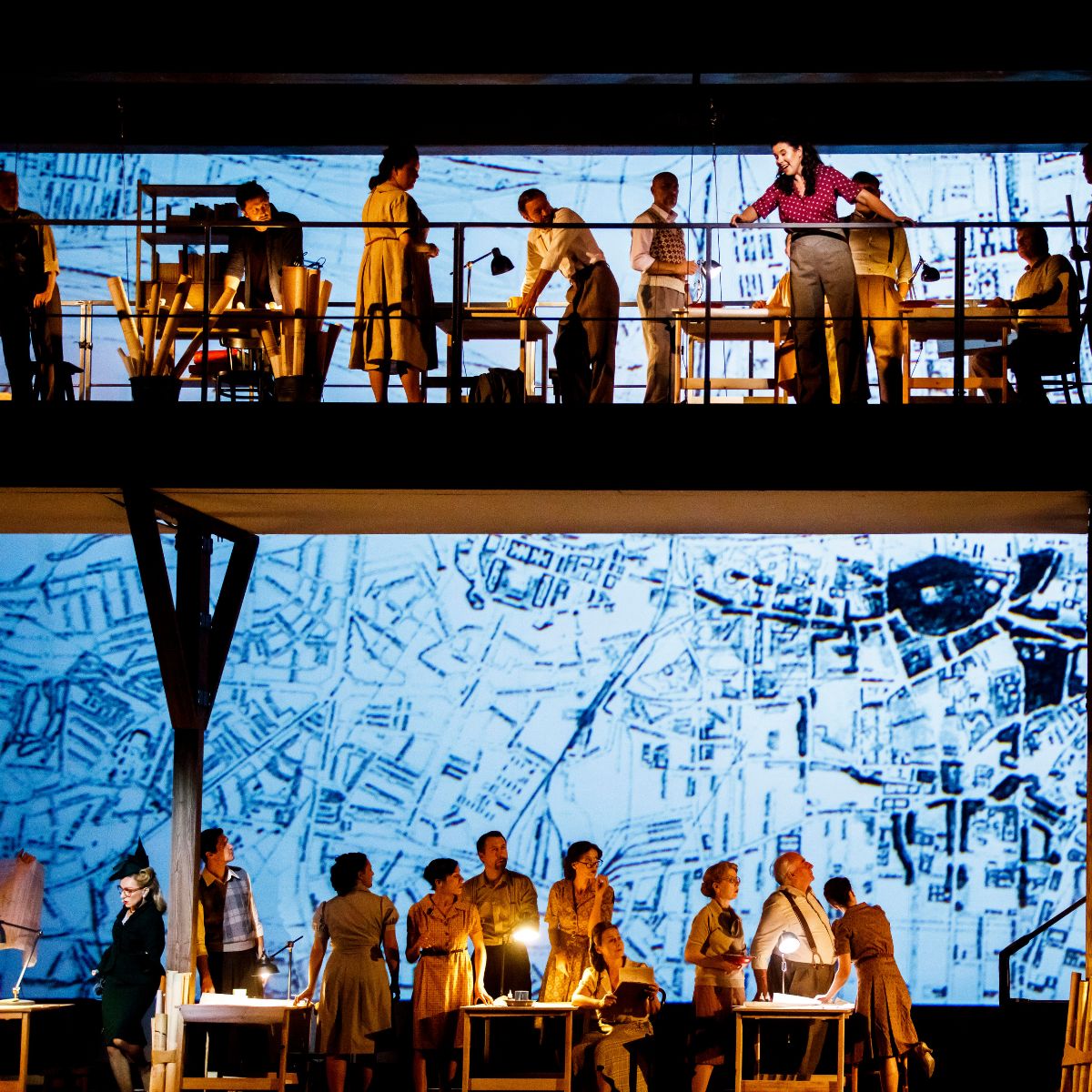
Opera in 16 scenes Libretto: Beniamin M. Bukowski after the novel Najlepsze miasto świata by Grzegorz Piątek World premiere: 19 September 2025, Polish National Opera, Teatr Wielki Co-producer: Sinfonia Varsovia In the original Polish with Polish and English surtitles The post-war reconstruction of the Teatr Wielki took twenty years to complete. The opera house’s reopening in 1965 was a momentous event that demonstrated the scale of wartime damage and the residents' determination to rebuild the city from the ashes. In 2025 the Polish National Opera will give a debut to an opera that tells the story of Warsaw’s reconstruction, marking eighty years since the arduous process began. The source of inspiration for the opera was Grzegorz Piątek’s book Najlepsze miasto świata. Warszawa w odbudowie 1944–1949 [The Best City in the World: Warsaw Under Reconstruction 1944–1949], which looks into the first years of the mammoth endeavour which brought together people of various viewpoints in a gesture of defiance against wartime destruction. Beniamin Bukowski wrote the libretto tapping into archival sources: political discourse, urban design parlance, and street vernacular. This is not, however, a historical chronicle but a tale of interwoven human lots. The opera’s two protagonists are women. One is a modernist architect modelled on Helena Syrkus, whose pre-war dream of redesigning the city to make it more functional has turned into gruesome reality. The other one is an American journalist inspired by Anne Louise Strong, a US reporter fascinated by Communism who travelled across worn-torn Poland with the Red Army. Their meeting will force the women to completely shift their perspectives. Composed by Cezary Duchnowski, the score combines orchestral sound with electronic music. The juxtaposition of solo parts and choruses makes it possible to shift the perspective on the city’s ordeal from general to personal. For the Warsaw-born director Barbara Wiśniewska the opera has a personal meaning as a reflection of her family history. At the same time, Wisniewska is interested in the broader social significance of the city’s destruction and reconstruction: a generational trauma that was successfully transformed into a joint endeavour of unparalleled scale. An Opera about Warsaw is not just an account of the tragic and glorious chapters in the city’s history but a very modern piece about the life of a metropolis suspended between the vision of urban planners and architects, political ideologies, and the needs and dreams of its residents. It is 1939. The Architect is at work. Like many pre-war urban planners, she envisioned rebuilding overcrowded Warsaw from the ground up. That vision comes true in quite a gruesome way when World War II begins. Air raid sirens wail. The Guide and the Architect escape the bombing. The year is 1944. The Red Army has taken position in Praga, on Warsaw’s right bank. Among the officers is the Journalist, an American correspondent captivated by communism, tasked with chronicling the triumph of the new political order. After the fall of the Warsaw Uprising, Soviet troops wait for orders to cross the Vistula River. In the devastated city centre, only Warsaw Robinsons, the survivors hiding in the ruins, remain. 17 January 1945. The Red Army moves into the heart of the capital, trailed by returning residents, who discover a city reduced to rubble. Among them is the Architect – transformed by the war, no longer who she once was. The arduous task of tidying up the capital, burying bodies, and clearing debris begins. The Architect watches over children as they play with an unexploded ordnance. At the hotel, the Journalist describes the first days after liberation, but fails to acknowledge the scale of poverty and hardship. In her account, she emphasises the positive aspects, the rebirth of life. The city is in disarray: some set up makeshift market stalls, others remain trapped in despair and wartime trauma. Many search for lost possessions. Winter passes. With the arrival of spring, despite the hopeless living conditions and ubiquitous crime, the shattered city stirs to life. The Architect retrieves her prewar plans for Warsaw and joins fellow architects already surveying the streets. A photographic backdrop is set up against the ruins. The Guide captures portraits of Warsaw’s residents – each of them has their unique memory of the city. The year is 1946. The Guide takes the Journalist to the Warsaw Reconstruction Office (WRO), where architects work tirelessly to shape new visions for the city. The Journalist interviews the Architect, who now serves as Secretary General of the Council for the Reconstruction of Warsaw. She explains the immense challenges of coordinating such an unprecedented construction effort, emphasizing the need for a comprehensive vision despite limited resources. Yet she admits that the project demands constant improvisation. She also reveals her personal motivation – remorse, tied to her nightmarish dream of creating a new, better Warsaw. The architects’ visionary work is further burdened by the sheer variety and overabundance of proposed solutions. Disheartened architects listen as politicians deliver speeches that curb their ambitions. The Party insists on a uniform, ideologically driven vision. Urban planners are left with no choice – if they wish to go on working, they must yield and accept countless compromises. Tensions are growing within the WRO team. There are calls for grand assembly squares and peace monuments, while children dream of carousels, slides, and ice rinks. The Journalist rarely leaves the Architect’s side, accompanying her at work, and a friendship begins to grow between them. To temper the Journalist’s unchecked optimism and confront her with the scale of tragedy that has befallen Warsaw, the Architect takes her to the ruins of the ghetto. There, the Journalist envisions the final moments of the Warsaw Ghetto Uprising: in a bunker on Miła Street, its leaders, betrayed and encircled by German forces, have chosen to commit collective suicide. In that vision, the Journalist finally grasps the complexity of the situation: the very rubble used for the reconstruction carries within it Warsaw’s searing history. The year is 1948. The Architect and the Journalist visit an orphanage where David Seymour, an American photojournalist of Polish Jewish origin, is capturing the post-war lives of children. He photographs little Teresa, who, when asked to draw a house, produces a chaotic image evoking explosion, smoke, and devastation. Another political rally takes place, harsher and more cynical than before. Politicians now speak openly of pouring concrete over the city. The Architect attempts to rationalize their decisions, still clinging to the possibility of positive change. The Journalist, however, begins to realize the truth: despite her radical communist convictions, she recognizes the falseness of the applause showered on the authorities. Riots erupt. Officers of the Secret Security Service beat those who dare to disturb the façade of unanimity. Among the victims is the Guide. When a Security officer turns on the Journalist, the Architect shields her, revealing her Party membership card. The Journalist is forced to leave Poland. She and the Architect bid each other farewell. Before departing, the Journalist admits that her convictions have shifted. She had set out to chronicle the city’s reconstruction, but instead witnessed the collapse of what she once believed in. The Architect, steadfast, resolves to continue the work of reconstruction. “I am leaving Warsaw in good hands”, the Journalist says before she departs.