About
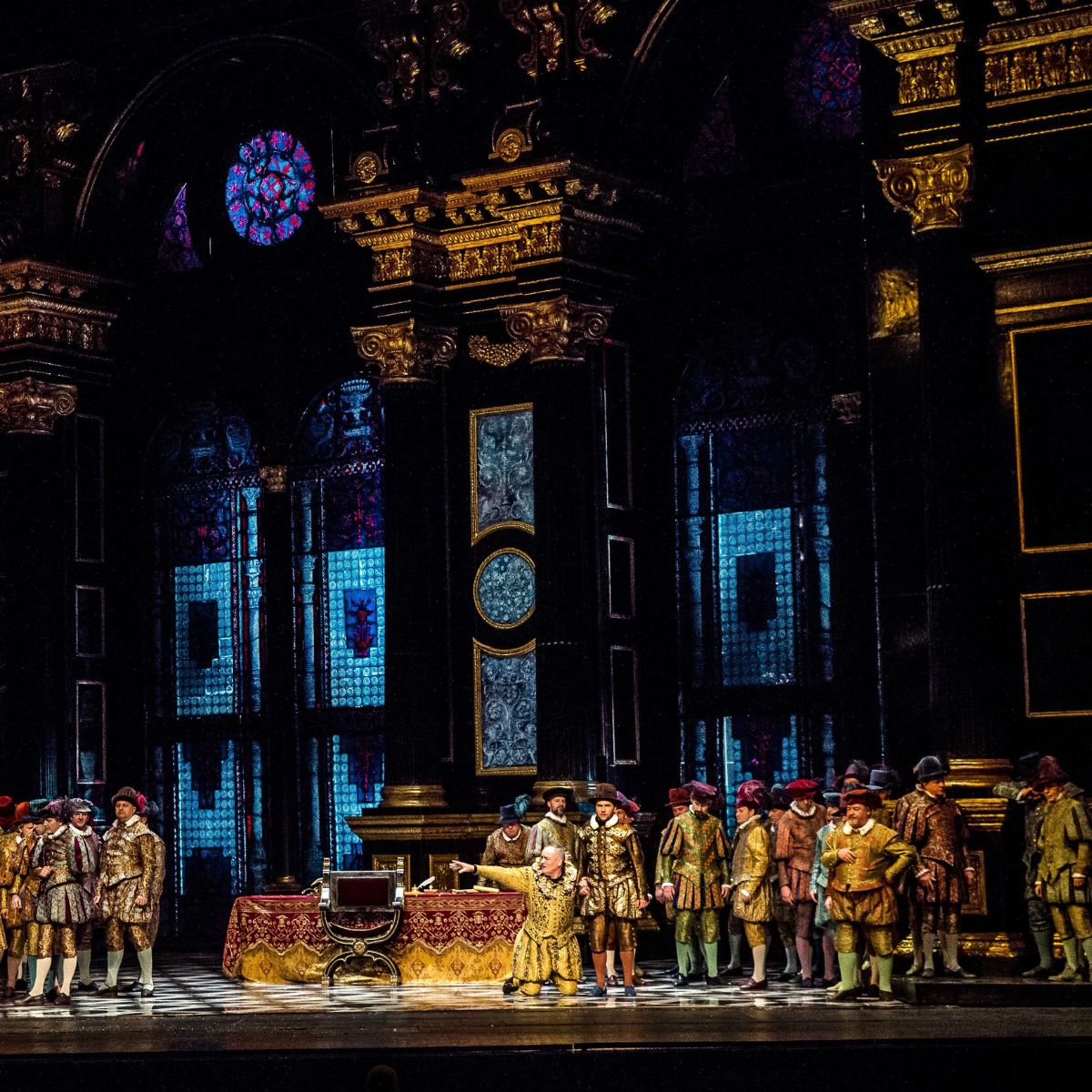
Opera in three acts Libretto: Francesco Maria after Victor Hugo's play Le roi s'amuse World premiere: 11 March 1851, Gran Teatro La Fenice, Venice Polish premiere: 8 November 1853, Teatr Wielki, Warsaw Premiere of this production: 12 March 1997, Polish National Opera, Teatr Wielki, Warsaw In the original Italian with Polish surtitles Italy is the world’s leading exporter of beauty in all its forms, including architecture, music, and the creative arts. This production of Rigoletto, directed by Gilberto Deflo and designed by Ezio Frigerio, should be featured on UNESCO’s World Heritage List. The dazzling music conveys a range of emotions, from joie de vivre to passion, despair, and mourning. The production is also a glowing tribute to stagecraft. The Duke of Mantua’s fabulous palace appears onstage only for a quarter of an hour, but its execution is timelessly beautiful. During the interval, the Polish National Opera’s well-coordinated technical crew carefully dismantles the ducal residence’s breathtaking stained glass, so that the audience can immerse themselves in a different mood in the subsequent act with the memory of the palace’s opulence still fresh in their minds. Once the curtain goes up again, the astonished public watches the stage being flooded with pouring rain… Nowadays, it is extremely rare to witness an opera staging that is both faithful to its era and genuinely compelling. This is classic opera at its best. Act I Strolling among the courtiers in his palace ballroom, the Duke ot Mantua lightheartedly boasts of his way with women ('Questa o quella'). After flirting with his newest quarry, the Countess Ceprano, he escorts her from the room, followed by his hunchbacked jester, Rigoletto, who openly mocks the Countess' enraged but helpless husband.A courtier named Marullo bursts in with the latest gossip: Rigoletto is suspected of keeping a young mistress in his home. The jester shortly returns with the Duke and, sure of his master's protection, continues to taunt Ceprano, who plots with others to punish him. When Monterone, an elderly nobleman, forces his way into the room to denounce the Duke for seducing his daughter, he is viciously derided by Rigoletto. As Monterone is arrested, he pronounces a father's curse on both the Duke and the jester, who falls to the floor in terror. Strolling among the courtiers in his palace ballroom, the Duke ot Mantua lightheartedly boasts of his way with women ('Questa o quella'). After flirting with his newest quarry, the Countess Ceprano, he escorts her from the room, followed by his hunchbacked jester, Rigoletto, who openly mocks the Countess' enraged but helpless husband.A courtier named Marullo bursts in with the latest gossip: Rigoletto is suspected of keeping a young mistress in his home. The jester shortly returns with the Duke and, sure of his master's protection, continues to taunt Ceprano, who plots with others to punish him. When Monterone, an elderly nobleman, forces his way into the room to denounce the Duke for seducing his daughter, he is viciously derided by Rigoletto. As Monterone is arrested, he pronounces a father's curse on both the Duke and the jester, who falls to the floor in terror. Late that night, brooding over Monterone's curse, Rigoletto hurries to the house where he has hidden his daughter, Gilda. On the way he encounters Sparafucile, a professional assassin, who offers his services; but the jester dismisses him, reflecting that his own tongue is as sharp as the murderer's dagger ('Pari siamo!'). His mood brightens when he is greeted by Gilda, who questions him about her long-dead mother; he nostalgically describes his wife as an angel ('Duet: Deh, non parlare'), adding that Gilda is all he has left. Afraid for the girl's safety, he warns her nurse, Giovanna, to admit no one to the house. As the jester leaves however, the Duke slips into the garden, tossing a purse to Giovanna to keep her quiet. He declares his love to Gilda (duet 'E il sol dell'anima'), who has secretly admired him at church, and tells her he is 'Gualtier Malde', a poor student. At the sound of footsteps Gilda begs him to leave; alone, she tenderly repeats his name ('Caro nome') and then goes up to bed. Meanwhile, the malicious courtiers stop Rigoletto outside his house and ask him to help abduct Ceprano's wife, who lives nearby. The jester is duped into wearing a blindfold and holding a ladder against the wall of his own house. Laughing at how they have tricked him, the courtiers break into his house and carry off Gilda. Rigoletto, hearing his daughter's cry for help, tears off his blindfold and rushes into the house: discovering only her scarf, he collapses as he remembers Monterone's curse. Act II In his palace, the Duke is distraught over the kidnapping of Gilda, whom he imagines alone and miserable ('Parmi veder le lagrime'). When his courtiers return, saying that it is they who have taken her and that she is now in his chamber, he rushes off to the conquest. In his palace, the Duke is distraught over the kidnapping of Gilda, whom he imagines alone and miserable ('Parmi veder le lagrime'). When his courtiers return, saying that it is they who have taken her and that she is now in his chamber, he rushes off to the conquest. Soon Rigoletto enters, searching for Gilda; though the courtiers are astonished to learn she is not his mistress but his daughter, they bar his way. The jester lashes out at their cruelty ('Cortigiani, vil razza dannata') but ends his tirade with a plea for mercy. Just then Gilda appears, dishevelled in her nightdress; she runs in shame to her father, who orders the others to leave. Alone with Rigoletto, Gilda tells of the Duke's courtship, then of her abduction ('Tutte le feste al tempio'). As Monterone is led to the dungeons, still cursing the Duke, the jester swears vengeance. Meanwhile, the lovelorn Gilda begs her father to forgive the Duke (duet 'Si, vendetta'). Act III On a dark night, Rigoletto and Gilda wait outside the abandoned inn on the outskirts of Mantua where Sparafucile and his sister Maddalena live. Gilda watches in disbelief while the Duke, disguised as a soldier and laughing at the fickleness of women ('La donna è mobile'), makes love to Maddalena. Rigoletto comforts his daughter as Maddalena leads the libertine on (quartet 'Bella figlia dell'amore'). Telling Gilda to dress as a boy, the jester sends her off to Verona, then pays Sparafucile to murder the Duke and leaves. On a dark night, Rigoletto and Gilda wait outside the abandoned inn on the outskirts of Mantua where Sparafucile and his sister Maddalena live. Gilda watches in disbelief while the Duke, disguised as a soldier and laughing at the fickleness of women ('La donna è mobile'), makes love to Maddalena. Rigoletto comforts his daughter as Maddalena leads the libertine on (quartet 'Bella figlia dell'amore'). Telling Gilda to dress as a boy, the jester sends her off to Verona, then pays Sparafucile to murder the Duke and leaves. As a storm gathers, Gilda returns to overhear Maddalena urge her brother to spare the handsome stranger and kill Rigoletto instead. Sparafucile refuses but agrees to substitute the next guest who comes to the inn. Gilda, resolved to sacrifice herself for the Duke even though he has betrayed her, knocks at the door and is stabbed. When the storm subsides, Rigoletto returns to claim the body; he gloats over the sack Sparafucile gives him, only to hear his supposed victim singing in the distance. Frantically cutting open the sack, he finds his daughter, who dies asking his forgiveness (duet 'Lassu in cielo'). Rigoletto cries out: 'Ah, the curse!'